
Description
About the Plant
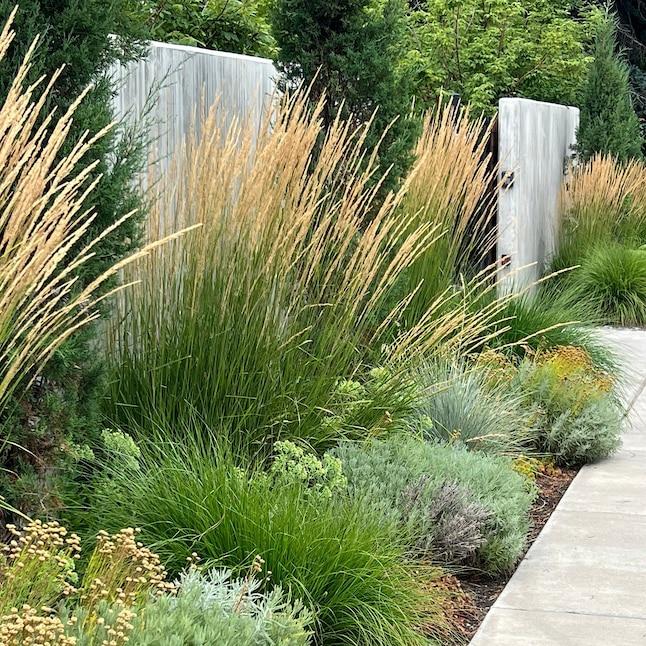
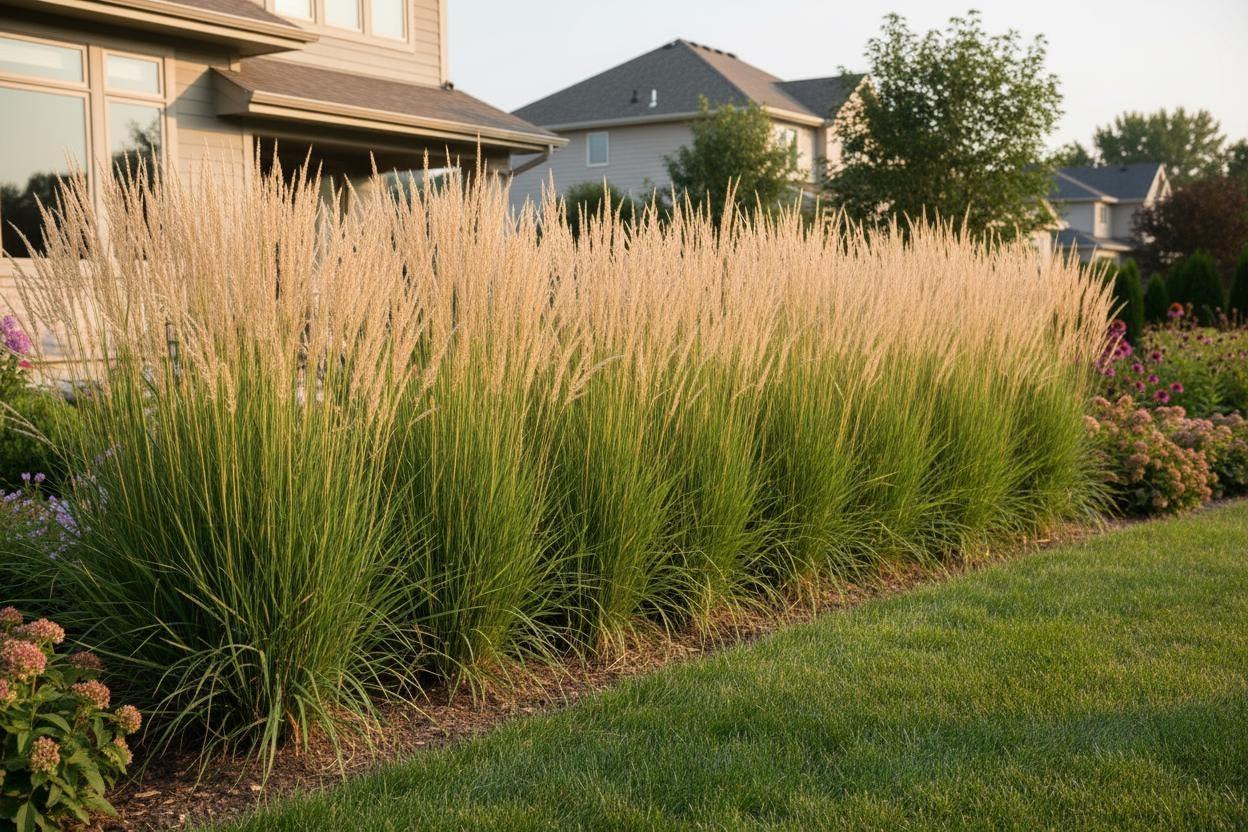
Karl Foerster Feather Reed Grass is a classic architectural ornamental grass valued for its tall, narrow, upright form. Its green foliage forms a neat vertical clump, followed by elegant flower stems that rise well above the foliage.
The flower plumes emerge in shades of green and pinkish-purple before gradually turning warm tan and golden brown. They remain attractive well into fall and winter, giving the garden structure when many other perennials have disappeared.
The exact mature height varies with growing conditions and the source; the flower stems can reach roughly 5–6 feet. N.C. Extension Gardener Toolbox
Why It Is So Good in a Landscape
Karl Foerster is particularly useful when you want height without a bulky shrub.
Its narrow vertical shape works beautifully:
- Along walkways
- Beside patios
- Against fences
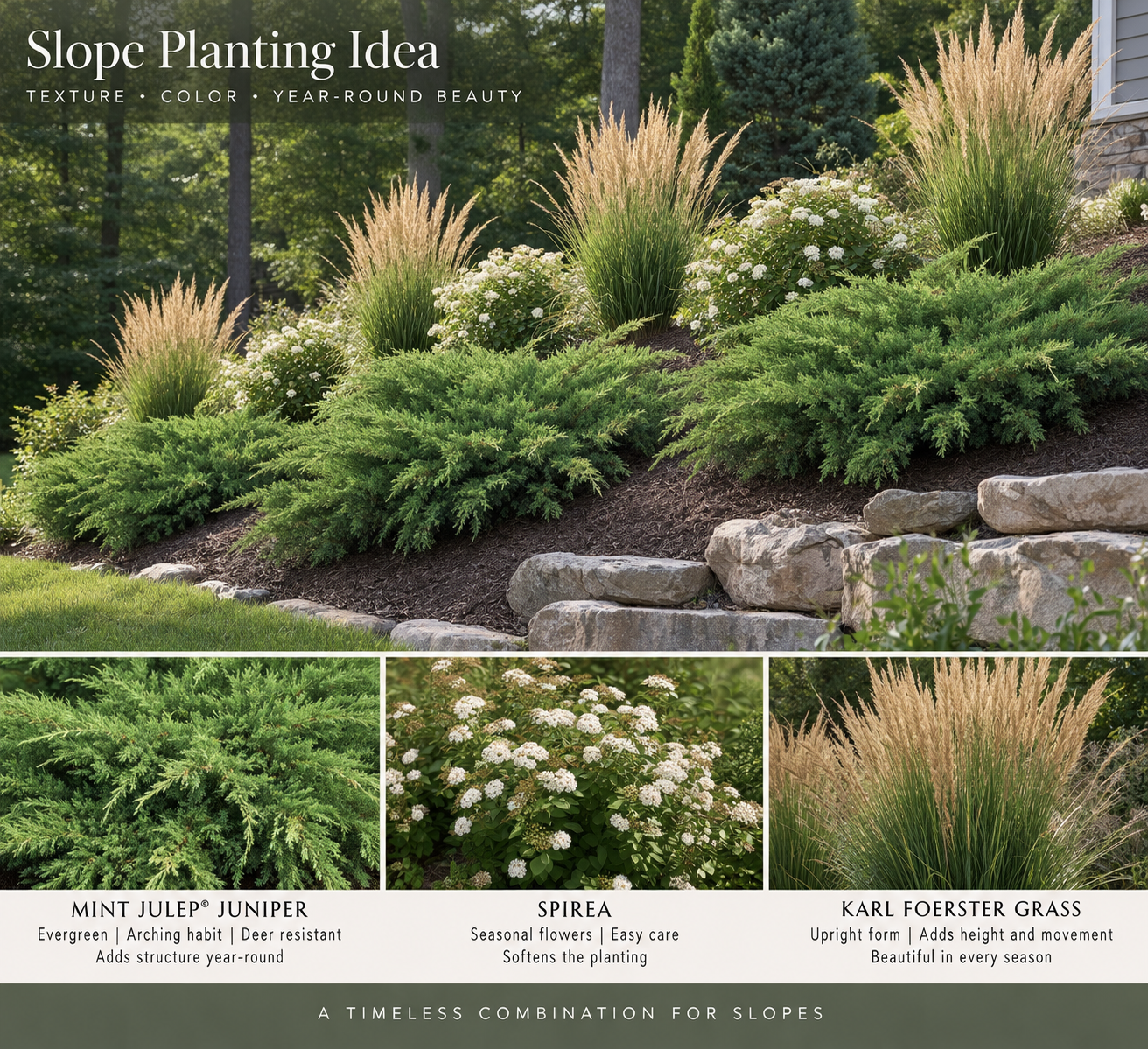
- In front of evergreens
- At the back of perennial beds
- In groups or rows
- As a single architectural accent
It is also useful in modern and mid-century-inspired landscapes because of its strong, clean vertical lines. UC Agriculture and Natural Resources
Care
Plant it in full sun in soil that is reasonably well drained but doesn’t dry out excessively. It tolerates clay and a range of soil conditions.
Leave the dried flower stems standing through winter—they provide excellent winter structure. Cut the grass back in late winter or early spring before new growth begins. N.C. Extension Gardener Toolbox
One especially nice characteristic is that ‘Karl Foerster’ is sterile, so it doesn’t produce viable seed and won’t spread around your garden by self-sowing. N.C. Extension Gardener Toolbox
Garden Note
This is one of the grasses I use for strong vertical structure in the garden.
The tall golden plumes catch the light beautifully, especially in late summer and fall. In winter, the dried stems remain upright and add movement and texture.


